Core module
Sustainable Business Model Design
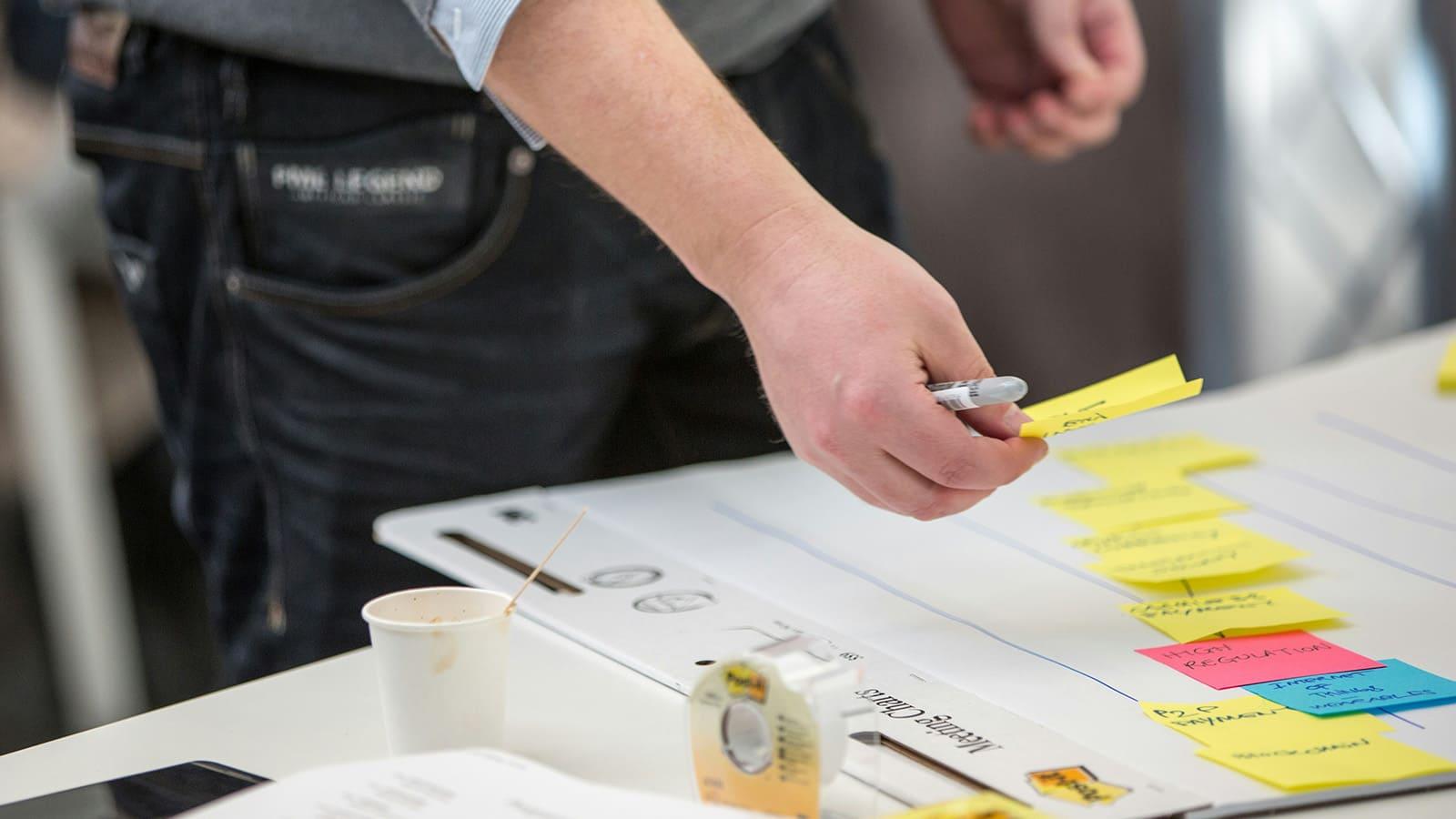
A one-day workshop for C-suite and strategy teams. A case study business model is used to explore how to test it against environmental limits, and how to make it work within them. The workshop uses the APres™ Sustainable Business Model Canvas.
Strategy needs a direction
Strategy rarely fails because of technical feasibility hurdles. It fails because it lacks fit with the future. A business model can be technically sound and still be a liability. The assumptions it rests on, about energy, inputs, regulation, customers and competitors, are shifting at once, and a model fixed around yesterday's assumptions will drift off course. Environmental limits are now one of those assumptions.
Value is made with stakeholders, not for them
Decarbonisation and the loss of nature are no longer a footnote on the context map. They change what customers pay for, what regulators allow and which inputs stay available. A firm that manages them as constraints will be outpaced by one that treats them as design conditions. That calls for strategy made with suppliers, customers, regulators and communities, not for them.
How the day runs
The workshop runs on the APres Sustainable Business Model Canvas, which extends conventional Business Model representations such as the Business Model Canvas to account for absolute environmental limits, and the stakeholders who depend on them.
The morning maps a case study business model and the strategy it serves. The afternoon introduces the APres canvas, and teams of three or four rework the model into one that creates value within environmental limits. Challenge first, then solution: name the obstacle, then design the response.
You leave with a practical understanding of how to map a business model, how to extend it to account for environmental sustainability with the APres Canvas, a clear view of external context vulnerabilities that apply, and an understanding of the importance of identifying workable alternatives that can open new opportunities for the business.
Outcomes
- Move from a firm-centric business model view to one embedded in its socio-economic system: co-created, adaptive, forward-looking.
- Review a strategy, positioning, business model and organisational alignment against where the external context is heading.
- Assess what the case study model can and cannot do, where it is exposed to disruption, and how readily it adapts.
- Identify the competitive challenges environmental sustainability creates, and how and where innovation turns them into opportunities.
- Reframe the value proposition: from environmental pressures to be reduced, to positive contributions the business makes.
Other modules

Nature- and Climate-Related Financial Risk
Finance, enterprise risk, strategy, sustainability and investor relations teams. Groups up to 20.

Sustainability Frameworks and Standards in Practice
Sustainability, reporting, data and assurance teams. Groups up to 20.

Sustainability Targets and Environmental Limits
Chief executives, finance directors, chief sustainability officers and board members. Groups up to 20.
Does your strategy have a future within planetary boundaries?
Sound business strategies disrupt the status quo. Tell us your situation and let's equip you with the necessary capabilities to build lasting value.
Enquire about this workshop